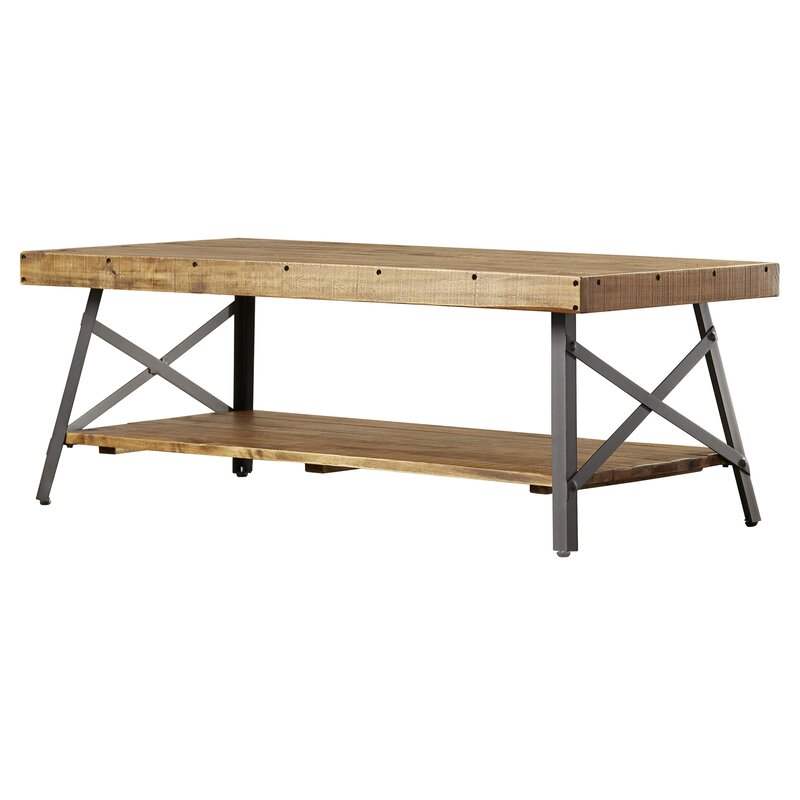
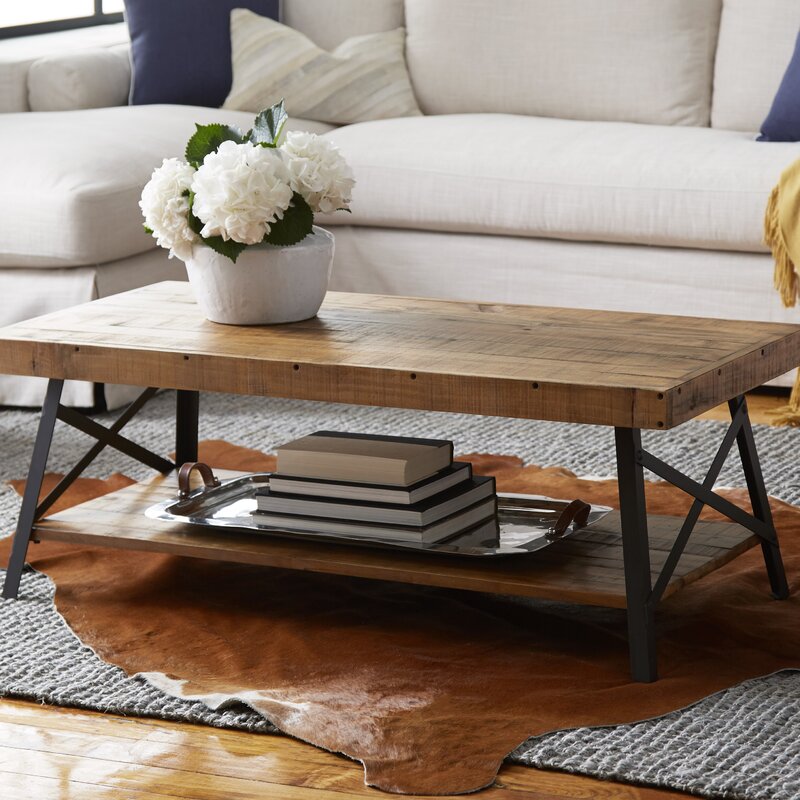
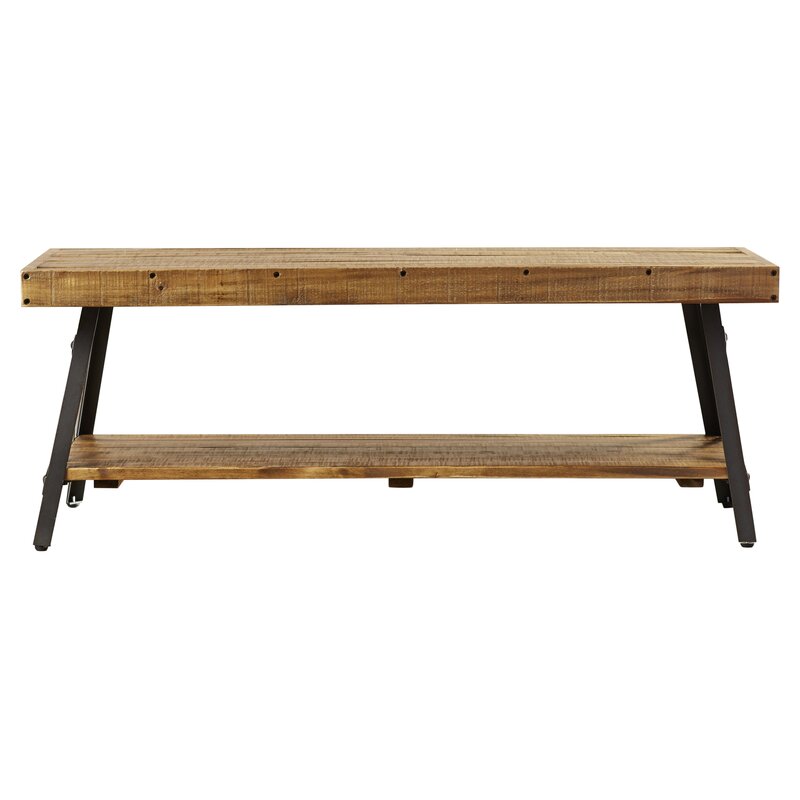
Images are for illustrative purposes only do not predict the size by looking at the picture, size of the product has been displayed on product title and product description, if you like to cut other size, please contact us.
This post is going to focus on a few workout templates to try out and tweak if you are over 40.
Exercising each and every day…
…without becoming exhausted in the process.
(Here are the links to part 1 and part 2 of this article.)
The body begins to “default into decay” at some point in your 40’s or 50’s. Daily exercise is the signal your body needs to override the default aging process.
I discuss this in detail in part 2 of this series.
Does daily exercise sounds tough or exhausting?
Well…the workout templates I’m going to lay out are geared towards increasing energy NOT depleting it.
I’ve found that doing something 7 days per week is, in some ways, easier than trying to do it 4-5 days per week.
Daily repetition is the way to create a habit.
…and habits are the way to do things on autopilot (little effort).
So let’s get right into the workouts.
#1: The Clarence Bass “Lift Once Per Week” HIT Template
This is a workout outlined based around the way Clarence Bass has trained the past 10+ years. This guy has stayed ultra-lean (5-6%) and muscular since 1980.
He is currently in his late 70’s and still super-lean and healthy.
This workout is a modified version of HIT…the one-set-to-failure approach that Mike Mentzer and Arthur Jones made popular in the 60’s-90’s.
This is a bare bones outline.
Tue: Walk 45-60 Minutes
Wed: Walk 45-60 Minutes
Fri: Walk 45-60 Minutes
Sat: Walk 45-60 Minutes
Sun: Walk 45-60 Minutes
Exercise Selection: Choose 8-9 exercises that work each muscle group in the body. For instance these 8 exercises would do the trick: Squat, Bench Press, Dumbbell Shoulder Press, Chin Up, Tricep Extension, Barbell Curl, Hanging Leg Raise, and Standing Calf Raise.
Sets and Reps: 2-3 warm-up sets per exercise and just 1 work set. Aim for around 6-10 reps, depending upon goals. Track your workout and try to maintain or improve in reps or weight on a consistent basis.
Only 1 resistance training workout every 7 days?
Clarence Bass took Mike Mentzer’s low volume one-set-to-failure approach and reduced it to the bare minimum.
In fact, if Clarence doesn’t feel 100% recuperated, he will take 9 days in between resistance workouts!
I figured Intermediate-to-Advanced lifters would enjoy this.
A large segment of the people who buy my courses and read my site and newsletter have been training for 15+ years.
The gym can get dull if it feels like the movie Ground Hog’s Day.
This minimal routine could be a fun thing to try out.
I like the idea of using a contrasting program to get the body to respond, once a routine gets stale.
Note: Full details of Clarence Bass’s minimal routine are found in his book “Challenge Yourself at Any Age”.
Also…bring tunes that get you pumped up for intense sets.
My preference is early-to-mid 90’s techno.
Trippy techno that they blasted in huge warehouses back in the day, works for me.
Stuff like this gives me serious energy…
Just bring your favorite music to the gym, because it makes a difference!
#2: The Greg O’Gallagher “Minimal RPT” Template
Greg O’Gallagher has a number of popular programs based around gaining size and losing fat with a minimum amount of time working out.
The term “Minimal RPT” describes it well.
RPT stands for Reverse Pyramid Training.
All that means is that you do the heavier low-rep sets, before the lighter high-rep sets.
My recommended tweak for 40+ year olds: Simply add in walking on your off days, and possibly one HIIT cardio workout once per week if you have the energy.
I’ll include his general outline with my added tweaks (walking).
Mon: Workout A – Half the Body Resistance Training
Tue: Walk 45-60 Minutes
Wed: Workout B – Other Half Resistance Training
Thu: Walk 45-60 Minutes
Fri: Workout A – Half the Body Resistance Training
Sat: Walk 45-60 Minutes
Sun: Walk 45-60 Minutes
Exercise Selection: Choose 4-5 exercises for Workout A and 4-5 exercises for Workout B. The goal will be to work the entire body by the time you go through both workouts.
Example for Workout A: Incline Press, Standing Press, Skull Crusher, Lateral Raise, and Hanging Leg Raise.
Example for Workout B: Weighted Chin Up, Hang Cleans, Barbell Curl, Bulgarian Split Squat, and Standing Calf Raise.
Sets and Reps: After warming up do a set of 5 reps. Rest 2-3 minutes and reduce weight by 10%, then do 7 reps. Rest 2-3 minutes and reduce weight by another 10% and do one last set of 9 reps.
So 3 total work sets per exercise.
Since I mentioned classic techno and shared a video above…
I have to include one of the greatest electronic tracks of all time.
It came out in 1991 and is still amazing to this day.
I just need to talk my gym into turning down the lights, installing a fog machine, and shooting green lasers into the free-weight area!
Okay, back to reality.
#3: Visual Impact “Strength Without Excess Size” Template
Women and Bodybuilding for Beginners Jupiterimages/Photos.com/Getty Images
Women bodybuilders do not typically build muscle as quickly or significantly as men; but with frequent high-volume weight training, they can still see enormous muscular developments. Bodybuilding requires workouts that feature a higher number of exercises, sets and repetitions, which overload the muscle fibers. This overloading stimulates the muscle-building process. Women just starting out should begin at the lower end of the high-volume workouts and increase their load as they develop.
Training Schedule
Novice female bodybuilders should start by weight training four days per week. Your muscles require 72 hours of rest after high-volume workouts, but you can lift four days per week by splitting your workouts into separate sessions. On Mondays and Thursdays, focus only on your legs, back and biceps. Dedicate Tuesdays and Thursdays to your chest, shoulders and triceps. After eight weeks of consistently working out at this frequency, begin working out six days per week. Target your chest, shoulders and triceps on Mondays and Thursdays, your back and biceps on Tuesdays and Fridays, and your legs on Wednesdays and Saturdays.
Workout Sessions
Each workout must be of high volume. In the beginning, perform three sets of each exercise, with each set featuring six to 12 repetitions. Rest periods between sets should be relatively short, between 30 and 90 seconds. After eight weeks of performing three sets of each exercise, bump up your training volume even more by completing four to six sets of each exercise. Use an appropriate amount of weight for each exercise. Begin with a lighter weight until you are comfortable with the technique of an exercise; then increase the weight accordingly. You should be able to perform at least six repetitions and no more than 12 of an exercise.
Exercises
Choose exercises that effectively target the muscle groups assigned to each day. To develop your chest, perform pushups, chest press and chest flys. For your shoulders, complete shoulder press, lateral raise and dips. Target your back with lat pulldown, seated row and chinups. You can work your biceps with dumbbell biceps curls and barbell biceps curls and your triceps with overhead triceps extension and triceps pushdown. For your legs, include squats, lunges, deadlifts, step-ups and hamstring curls. During each workout, focus on larger muscle groups first, then move onto smaller muscles. For example, on the day you work your chest, shoulders and triceps, complete all of your chest exercises first. Follow those with shoulder then triceps exercises.
Considerations
The muscle-building process for bodybuilders requires an increase in calorie and protein intake. Women should take in a total of at least 1,200 to 1,500 calories every day to fuel properly the muscle-building process. In addition, ensure you consume enough protein; multiply your body weight in kilograms by 0.8 to find your daily recommended minimum protein consumption and then by 1.7 to find your daily recommended maximum protein consumption.
If you want to take your workouts to a whole new level, start with your middle.
“People achieve better results when they do core exercises at the beginning of their workout instead of the end,” says Alwyn Cosgrove, C.S.C.S., coauthor of The New Rules of Lifting for Abs.
Your core—the dozens of muscles between your shoulders and your hips—contracts first in every exercise, he explains. All the energy you exert starts in your midsection, and is then transferred to your limbs.
A strong core allows you to apply more force to a barbell, whereas a weak core decreases the amount you can apply.
But in order to prime your core muscles so they fire better during your workout, you need to train your core right after your warmup, he says.
By training your torso when your muscles are fresh, you achieve the fastest gains, says Cosgrove’s New Rules coauthor Lou Schuler, C.S.C.S. You can do the moves with more intensity and better attention to form, and get more out of them than if you waited until later to perform them.
In fact, a 2012 review in the journal Sports Medicine found that people perform more reps of an exercise with heavier weights when they perform it at the beginning of their session than when they do it at the end.
The reason: You have more energy and focus earlier in your workout, says Schuler.
On the flip side, research shows that whatever you do last, improves the least.
“So if you always train your core at the end of your workout, it’ll never improve,” Cosgrove says. And that'll only hold you back in every other lift.
You can’t do just any moves, though.
Performing classic ab moves like crunches and situps at the end of your workout is an exercise in futility. These moves only work the muscles that allow you to flex or round your spine, says Schuler.
During heavy lifts like deadlifts and squats, you want to prevent your spine from moving. A stable core is essential for keeping your lower back and pelvis aligned in a safe, neutral position so you can lift heavy without risk of injury, explains Cosgrove.
Start your workout with 5 minutes of core moves that focus on stability like planks, side planks, mountain climbers, and pushups. You’ll be able to lift more iron, work more muscle, and burn more calories, he says.
Original article and pictures take www.menshealth.com site
Why You Should Do Exactly 21 Reps to Build a Bigger Chest
The ‘21s’ method is a muscle-building technique that has stood the test of time—but you rarely see it applied to anything other than biceps curls.
The concept is simple: During a set of 21 reps, you’ll progress through three different ranges of motion to focus on building strength at different phases of the movement.
You do the bottom half of the movement for the first seven reps, the top half for the next seven, and then the full range for the final seven reps.
By ironing out the sticking points at the top and the bottom of the rep, 21s can stimulate new muscle growth.
“You can apply this to any movement,” says Men’s Health Fitness Director BJ Gaddour.
Ready to try it out? Watch Men’s Health Australia Training Advisor Cam Byrnes demonstrate how to apply the 21s technique to the dumbbell chest press.
“I recommend you do three sets with a two-minute break in between,” says Byrnes. That’ll allow your chest enough recovery time to attack the next set with max effort.
Original article and pictures take www.menshealth.com site
There is a very fine line with pant suits for women (and I guess men too). Most people shy away from the pant suit and go for a skirt or dress when its time to do business professional. However, a pant suit that fits well can really look awesome if you wear it the right way. I went for a more fitted suit to be a little bit more feminine. I also paired it with a more modern (but comfortable height) heel to give the suit a little bit more style. With styled hair and lipstick, you can definitely rock the pant suit for those business professional attire events.
Business Professional – Women’s Fitted Suit
Suit – H&M. Blouse – H&M. Shoes – Steve Madden.
For more business professional fashion tips, make sure to subscribe to my blog via email! You can also follow my social media channels for updates (Instagram, Twitter, Facebook).
Original article and pictures take www.modmedblog.com site
If the weight loss is a combo of muscle and body fat?
The result is a mediocre transformation.
Calorie Deficit + Resistance Training = Magical Transformation
Resistance training sends a signal to the body.
This signal is an instruction for the body to keep muscle tissue.
Without this signal the body will draw from both muscle tissue and body fat when dieting creates a calorie deficit.
When you see Weight Watchers style transformations, it is mainly weight loss through diet alone.
I think Weight Watchers is awesome by the way.
It has helped countless people.
BUT
To reach exceptional levels of health and fitness you can’t leave out resistance training.
Any form of resistance can work.
I like commercial gym equipment, but there are a bunch of other options that can work as well.
How much resistance training do you need?
It doesn’t take much.
We will discuss that in a sec…
…but first a music video break.
The music theme for this post will be pop music cover tunes with a twist.
BBC Radio 1 in London has a feature they call “Live Lounge”.
Musicians come in and play their own hits, then perform 1-2 current popular songs by other artists.
It’s all recorded live…
…and they typically go all-out with these cover songs and play them as if they are their own hit song.
Kings of Leon performing a little Selena Gomez.
“Cause all of the downs and the uppers. Keep making love to each other. And I’m trying, I’m trying, I’m trying, I’m trying… but I… Can’t keep my hands to myself.” – Selena Gomez Kings of Leon
When you are dieting you wind up taking in fewer calories.
Which means fewer nutrients for recovery.
Because of this, you need to reduce lifting volume.
How much can you cut back on volume?
“The 2/3 Rule”
The general idea?
You can maintain fitness by cutting out 2/3 of what it took to get there.
It would be less confusing to call this the 1/3 rule.
You can maintain with 1/3 of the actions it took to improve.
This rule applies to strength, muscle mass, and VO2 Max.
It takes a lot less effort to maintain than it does to improve.
Here’s the important part.
Volume can be cut by 2/3, but INTENSITY must be maintained.
No need to increase the intensity…
Just lift using the same weights it took to reach your current strength levels (increasing the intensity is just as bad as lowering it).
Note: I don’t think you can maintain muscle forever off of super low volume, I have seen it work well for 2-3 months. More long-term studies need to be conducted.
Craig David improving upon a Justin Bieber hit.
A little work goes a long way once it comes to muscle maintenance.
I still recommend getting in daily exercise (when possible).
Muscle size and strength is just one element of health.
Long-term health requires daily movement.
The majority of us simply don’t get enough exercise…
…and technology is making it worse.
This doesn’t have to be an official gym workout.
I like to hit the gym Mon-Fri.
…even when I’m in maintenance mode.
What does this look like?
Here’s a template that works well.
Sets and Reps: Only one exercise per muscle group using 4-5 sets per exercise. Use similar rep ranges and intensity levels it took leading up to maintenance.
No direct arm work? Biceps and triceps get worked hard enough working back, shoulders and chest. If you are paranoid of muscle loss throw in 2-3 sets for bi’s and tri’s.
Cardio every workout? The resistance training in this example is so brief that it is super easy to fit in 20-45 minutes of cardio. Intensity levels vary from walking to intense HIIT style intervals.
What type of diet setup helps maintain muscle?
I’ll cover that in a sec.
Right after Bastille covers a Miley Cyrus tune.
“Red cups and sweaty bodies everywhere. Hands in the air like we don’t care. Cause we came to have so much fun now. Got somebody here… might get some now. ” – Miley Cyrus Bastille
I like to keep diet as simple as possible.
Keep calories low enough to get into a deficit.
Try to get around 100 grams of protein per day.
Eat mainly unprocessed foods.
Does 100 grams of protein per day sound WAY too low?
Studies have shown people GAINING muscle on less than .3 grams of protein per pound of bodyweight.
(That is around 50-60 grams per day for a 180 pound man.)
Brad Pilon has a good article about this:
Obviously, an elite bodybuilder would need more than that.
…but my articles and courses aren’t aimed at bodybuilders.
My courses help people become slim with muscle definition.
How many calories per day should you aim for?
If fat loss is your goal…
A good starting point is to AVERAGE 12 calories per pound of bodyweight per day.
If you know that you are going to go above this on the weekends?
…simply eat less Mon-Fri.
This is just a starting point.
If you aren’t losing weight, reduce your calories a bit more.
Final thoughts:
Based on all of the studies I’ve read it seems that even a small dose of resistance training maintains muscle.
…even when calorie intake is low.
…even when protein is low.
Resistance training sends a powerful signal for the body to keep muscle it has.
As long as nutrition minimums are met…
Your body will hold onto muscle with a bit of resistance training.
So go lift something!
Cheers,
-Rusty Moore
As a former fitness coach to fashion models, I can teach you how to increase muscle definition without adding size.
College days are the most memorable days of your life. Let’s play a small game. Ask anyone elder or double your age to share pictures of their college days and we bet everyone person in five will say this “Gosh! Look how I use to dress!”
So now you know you want to dress nice for your college, let’s take this in a fun and positive manner!
When we talk about college fashion, comfort always comes first like it does everywhere else too. So you don’t want to wear blazers and suit up every day. No, of course not!
Comfort Comes First
You don’t want to keep adjusting in your clothes in between your lectures (if you attend them) or while hanging out with new fellas in the campus. For that, you need to wear clothes in which your body can breathe freely. Where there’s cotton, there’s comfort!
Jeans
Don’t you want to grow up and sing ‘Purani Jeans Aur Guitar’ song? Jeans are to be worn the most in your college days. They’re young and comfortable too. You can go old school and wear bell bottoms on one of the days or wear a classic jeans.
Shoes
Slip ons for the lazy days to get you easy and shoes for the days when you organize those never ending college fests and rehearsals. Add colorful lasses to your converse and try various styles of knots. You’re young and you don’t want to miss on colors. Wear colorful shoes and go mad.
Article Name
What You Can (and Can't) Wear to College!
Description
Dont know how to dress for your College? Here's your help. Dress up for college without any fuss.